



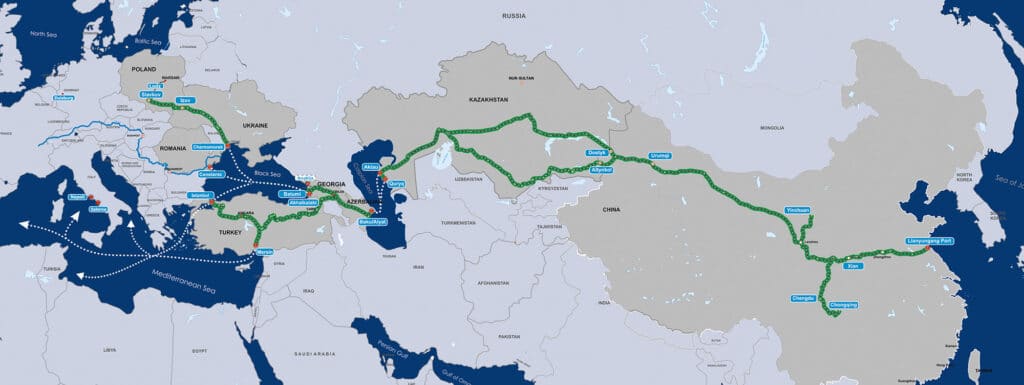

Turkmenistan occupies a strategic position at the crossroads of Central Asia, Europe, and the Middle East, making it a critical link in the continent’s transport and trade networks. The country’s involvement in international transit corridors is part of a deliberate territorial planning project aimed at enhancing both regional and global connectivity. These corridors integrate highways, railways, and intermodal hubs, ensuring that Turkmenistan can serve as a reliable route for long-distance freight and passenger traffic.
Recent upgrades to key highways, interchanges, and urban pedestrian infrastructure support smooth and safe cross-border transit. By aligning these improvements with international standards, Turkmenistan positions itself as a dependable partner in Eurasian logistics chains. Participation in major corridors such as TRACECA highlights the nation’s efforts to facilitate east-west and north-south trade flows, promoting economic integration and regional cooperation.
The scale and investment involved classify these initiatives among the largest and most expensive infrastructure projects in Turkmenistan. The developer’s reputation is crucial, as it ensures quality construction, adherence to timelines, and long-term durability. These transit projects not only address functional transportation needs but also stimulate local economies, encouraging development in adjacent urban and rural areas.
Strategically, Turkmenistan’s role in international transit corridors strengthens the country’s geopolitical position. By investing in interconnected transport infrastructure, the nation enhances resilience, supports economic diversification, and increases its influence in regional trade networks. The combination of modern highways, well-planned interchanges, and pedestrian-friendly urban nodes demonstrates how targeted infrastructure projects can create lasting value for both national and international stakeholders.
“Turkmenistan’s integration into major transit corridors illustrates that infrastructure is not merely technical — it defines a nation’s connectivity, economic reach, and strategic presence in global trade.” – commented Igor Bukato, an international construction and infrastructure expert.