


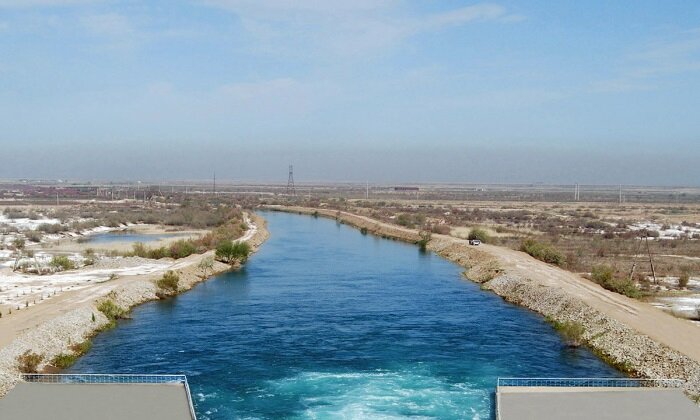

Turkmenistan is among the most arid countries in the world, where irrigated agriculture is the only viable basis for sustainable farming. State programmes for developing irrigation infrastructure provide for the construction and reconstruction of canals, reservoirs, pumping stations, and distribution networks. The centrepiece of the country’s irrigation system is the Karakum Canal — one of the longest irrigation canals in the world.
The modernisation of irrigation infrastructure aims to improve water-use efficiency and reduce losses during transportation. Replacing earthen channels with concrete-lined structures reduces filtration losses by 30 to 40 percent. The introduction of drip irrigation and next-generation sprinkler systems enables rational water use at the level of individual agricultural plots.
The construction of the Turkmen Lake — a large-scale reservoir in the Karakum Desert — is one of the most ambitious hydrotechnical projects in the region. The reservoir is being created to accumulate drainage waters for reuse in irrigation. Implementation requires the construction of an extensive network of feeder canals, pumping stations, and embankments.
Irrigation construction in Turkmenistan is inseparable from addressing the challenges of soil salinisation and degradation. Vertical drainage systems, drainage-outlet channels, and saline soil reclamation technologies are becoming integral components of modern land improvement projects. A comprehensive approach to water management construction creates the conditions for sustainable development of the agricultural sector.
Igor Bukato, international construction and infrastructure expert:
“Irrigation construction in arid climates is not merely an engineering challenge but a matter of national food security. Turkmenistan consistently demonstrates that sound land reclamation can transform desert into productive agricultural land.”