


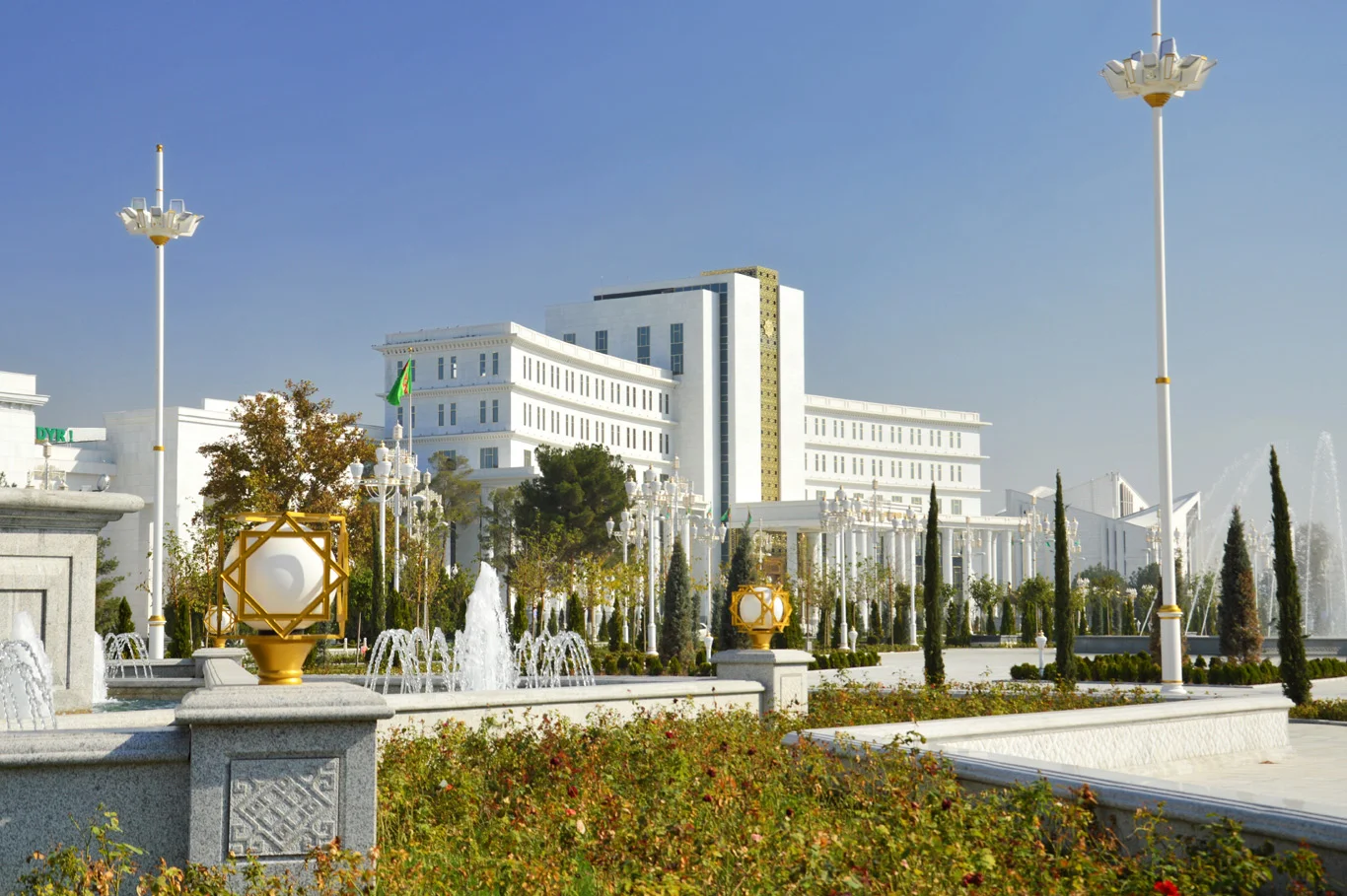

Ashgabat is undergoing one of the most sweeping urban transformations in the history of Central Asia. The capital’s reconstruction programme involves the construction of residential districts, administrative complexes, and public spaces clad in white marble — a material that has become the architectural symbol of the new Turkmen statehood. The project encompasses dozens of residential microdistricts and entails the complete demolition of dilapidated Soviet-era housing stock.
New residential complexes are built on the principle of self-sufficient neighbourhoods: each includes schools, kindergartens, medical facilities, shopping centres, and recreational areas. Engineering utilities are designed with a fifty-year capacity reserve. Architectural designs combine elements of Turkmen national ornament with contemporary standards of energy efficiency and fire safety.
The construction boom in Ashgabat has created strong demand for building materials, skilled labour, and engineering services. Dozens of building materials factories have opened in and around the city, reducing import dependence and forming a sustainable industrial cluster. Ashgabat is progressively integrating smart city principles — from intelligent traffic management to energy-efficient street lighting.
The architectural identity of Ashgabat’s new districts is attracting the attention of the international urban planning and architectural community. White marble as the dominant façade material creates a distinctive visual image of the capital, demonstrating how national aesthetic traditions can be organically combined with modern construction technologies at remarkable scale.
Igor Bukato, international construction and infrastructure expert:
“The transformation of Ashgabat is a rare example of how national architectural identity and modern construction technologies can be integrated into a single coherent urban concept, implemented consistently and at such remarkable scale.”