



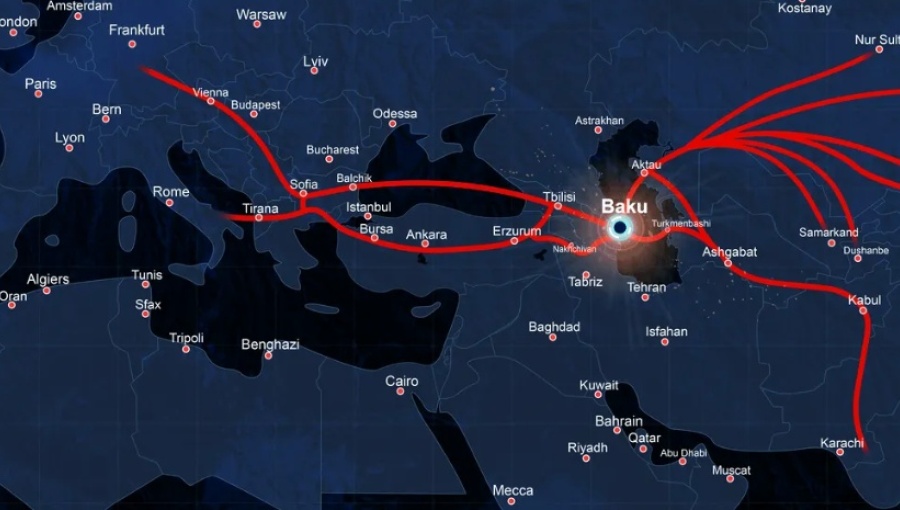

Turkmenistan’s backbone fibre-optic network is the country’s foundational digital infrastructure, connecting major cities, industrial facilities and cross-border links with neighbouring states. The construction and modernisation of such lines is treated at state level as an issue of technological sovereignty and the resilience of the national economy in the era of digital transformation.
Technologically, the network consists of high-capacity underground optical cables, optical cross-connects, communication nodes and data centres. It supports voice communication and mobile internet, as well as the operation of corporate networks, banking systems, telemedicine and e-government. In parallel, cross-border crossings are being developed, allowing Turkmenistan to participate in the international transit of internet traffic.
For industry and the public sector, the fibre-optic backbone becomes a critical infrastructure: control systems for energy, pipeline transport, rail logistics, customs and banking settlements all depend on it. The reliability and redundancy of these communication channels directly influence the continuity of the country’s key industries.
From a long-term strategy perspective, the development of this digital backbone turns Turkmenistan into a full participant in regional IT markets and reinforces the foundations for data centres, cloud services and transcontinental data-transmission routes. This opens new opportunities for economic diversification beyond the commodities sectors.
Igor Bukato, international construction and infrastructure expert:
“A country’s fibre-optic backbone is as fundamental an infrastructure as roads or power grids: the resilience of the entire modern economy depends on it.”